Ask any experienced wedding photographer what separates a relaxed, joy-filled wedding day from a stressful one, and the answer is almost never the flowers, the venue, or even the weather. It’s timing. A thoughtful wedding day timeline is the quiet backbone of the entire celebration — it protects your photos, keeps your guests comfortable, and lets you actually be present for the moments you’ve spent months planning. After more than 25 years photographing and filming weddings across Long Island and New York City, our team at JS Visions has learned that the couples who feel calm and unhurried on their wedding day are the ones who built a realistic schedule and shared it with everyone in advance.
Below we’ll walk through how the hours of a wedding day actually fit together, how long the photography really takes, the etiquette details couples most often overlook, and the simple tool we use with every couple to make sure nothing slips through the cracks.
Why Timing Is Everything on a Wedding Day
A wedding is essentially a series of moving parts — hair and makeup, transportation, a ceremony, portraits, a cocktail hour, dinner service, toasts, dancing — and each one depends on the one before it. When a single block runs long, it doesn’t stay contained; it pushes everything after it later. Hair and makeup that finish 30 minutes behind can delay the first look, which shortens portrait time, which spills into cocktail hour, which means you miss the soft evening light entirely.
That’s why professionals plan backward from the ceremony and build in breathing room. When the schedule is realistic, photos feel unhurried, the ceremony starts on time, and you get to enjoy your own celebration instead of watching the clock.
A Realistic Wedding Day Timeline, Hour by Hour
Most wedding days span roughly 10 to 14 hours from the first swipe of makeup to the grand exit. While every wedding is different, a typical flow looks like this:
- Hair & makeup — begins about 4 to 5 hours before the ceremony. Larger wedding parties need more time than couples expect, so we always recommend padding this block generously.
- Coverage begins — at JS Visions we typically start about 1½ hours before the bride is scheduled to leave the getting-ready location, so there is unhurried time for getting-ready moments, details, and a first look.
- First look & portraits — 1 to 2 hours before the ceremony if you choose to see each other early.
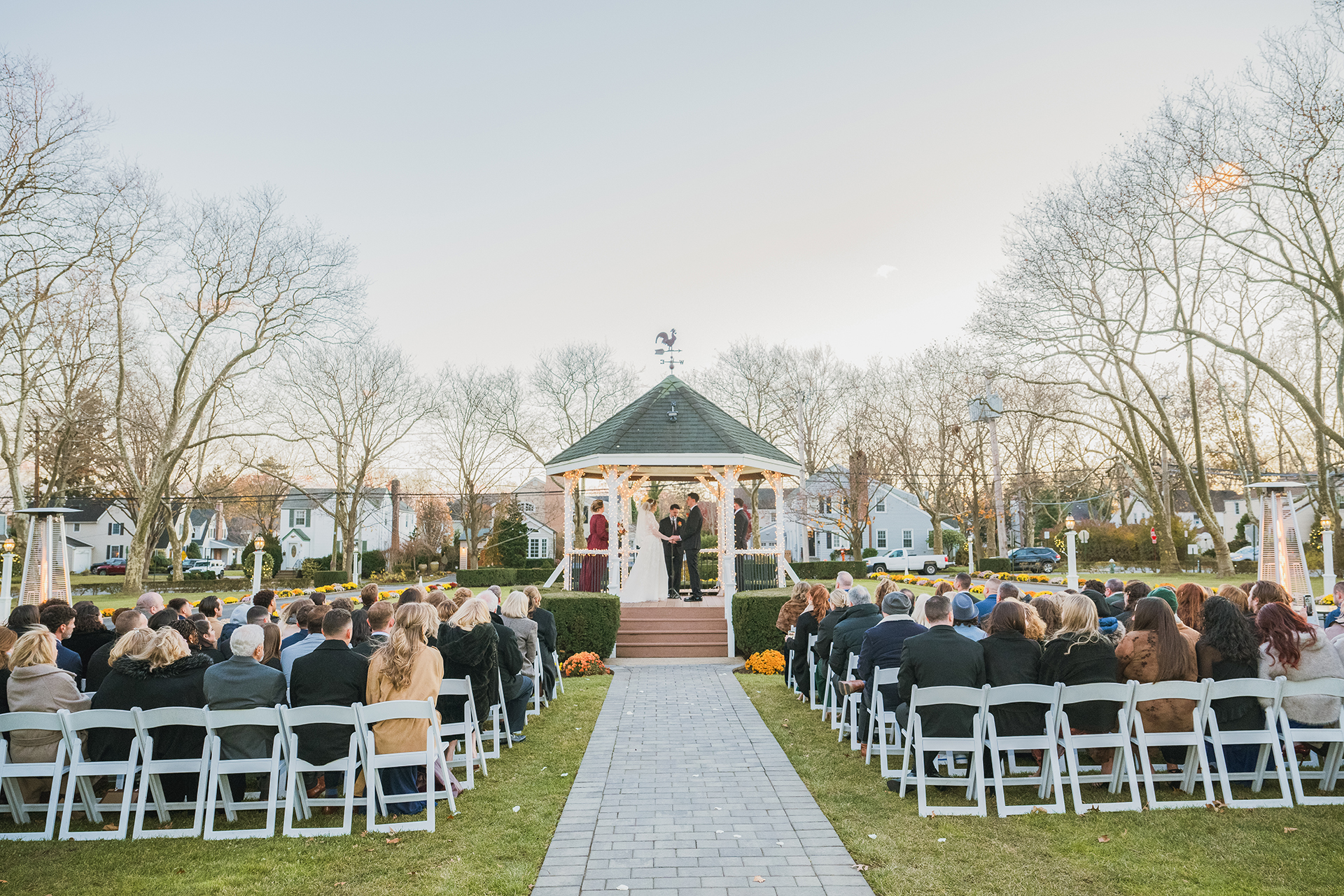
- Ceremony — usually 20 to 30 minutes (longer for a full religious service such as a Catholic Mass).
- Cocktail hour — about 45 to 60 minutes, which doubles as prime portrait time if you skipped a first look.
- Reception — grand entrance, first dance, dinner (roughly 45 minutes to an hour), toasts, cake cutting, and open dancing.
- Golden hour & exit — a short sunset portrait session, then the last dance and send-off, typically wrapping between 10:30 p.m. and midnight.
On Long Island, a ceremony start between 3:30 and 4:30 p.m. tends to be the sweet spot for an eight-hour photography package — it balances a reasonable morning, strong afternoon light, and a full evening reception.
How Long Wedding Photos Actually Take
This is where couples most often underestimate. A common assumption is that the hour between the ceremony and reception is enough for every photo — but it rarely is. As a realistic guide, we plan for roughly:
- Family formals — about 30 minutes (more if you have a large or blended family).
- Wedding party photos — 15 to 30 minutes when everyone is gathered and ready.
- Couple’s portraits — 30 to 45 minutes for the images you’ll treasure most.
Add those up and you can see why a single hour feels rushed. This is the biggest advantage of a first look: completing most portraits before the ceremony means you actually get to enjoy your cocktail hour with your guests instead of posing through it.
Don’t Skip Golden Hour
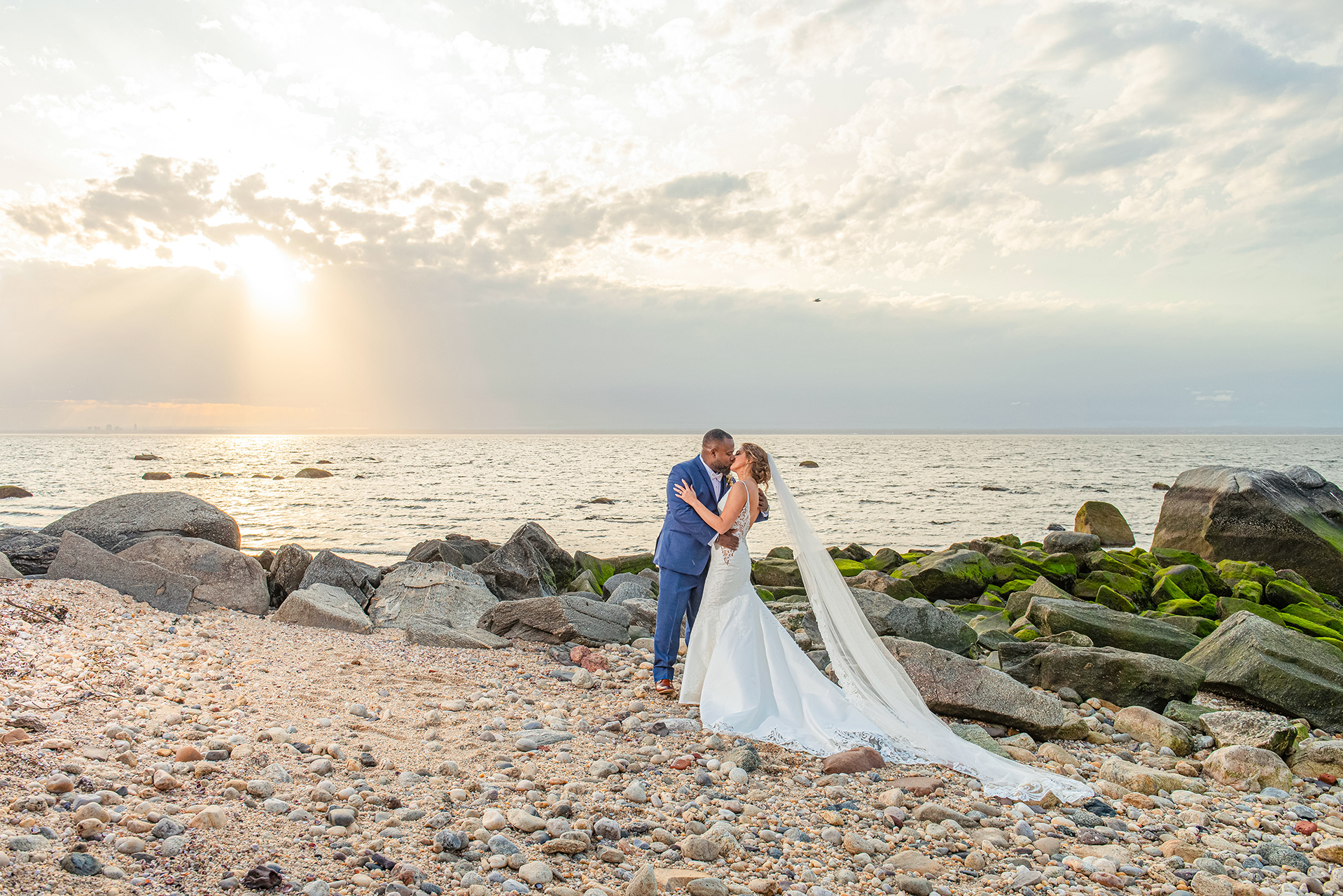
The 30 to 45 minutes before sunset produce the softest, most romantic light of the entire day. We like to steal you away from the reception for just 15 to 20 minutes during this window — it consistently delivers the dreamiest portraits of the night. Because sunset shifts throughout the year, we check the exact sunset time for your date and build this little pocket of light directly into your timeline.
The One Fix That Prevents Most Problems: Buffer Time
If you take away a single lesson, let it be this one. Things always take a little longer than planned, so we build unscheduled buffer into the day — about 30 minutes in the getting-ready block and 10 to 15 minutes into every location change or group transition. If the buffer goes unused, you gain a few relaxing moments. If something runs long, the buffer quietly absorbs it without knocking the rest of the day off track. A timeline without buffer isn’t a plan; it’s a wish.
Wedding Day Etiquette: The Details Couples Forget
Beyond the big blocks, a handful of etiquette and logistics details make an outsized difference:
Put the real start time on your invitation
It’s tempting to print a time 15 minutes early to “beat the latecomers,” but this usually backfires — guests already tend to arrive 10 to 15 minutes before the listed time, so a padded time just leaves everyone sitting and waiting. Print the honest ceremony time, and add your cushion to the timeline instead of the invitation.
Budget for travel between locations
If you’re getting ready somewhere separate from your ceremony or reception, give yourself more transit time than you think you need — and add an extra 10 to 15 minutes every single time the group loads in and out of vehicles. Those minutes add up fast.
Remember your vendors
Plan for vendor meals during dinner service and coordinate setup windows so your photographer, DJ, florist, and caterer aren’t overlapping in the same space at the same time. Well-fed, well-scheduled vendors do their best work.
Share the timeline with everyone
A schedule only works if the people running the day can see it. We recommend sharing your finished timeline with your photographer, planner, DJ, catering manager, and venue coordinator at least two weeks before the wedding, so every professional is working from the same page.
How JS Visions Makes Sure Nothing Is Missed
A great timeline depends on great information — and gathering that information should be the easy part. That’s why we provide every couple with a Wedding Day Information Form. It’s a simple online form where you tell us the key details of your day: your getting-ready locations and start times, ceremony and reception venues, family portrait groupings, transportation, and any special moments or requests you want us to capture.
Once we have your form, our team builds a photography timeline around it and reviews it with you well before the wedding — so there are no surprises, no missed family photos, and no scrambling on the day itself. It’s a small step that makes the entire day flow more smoothly, and it’s one of the reasons our couples describe their wedding day as calm and unhurried. You can always reach out to our team or browse our frequently asked questions if you’d like to talk through your specific timeline.
Frequently Asked Questions
How many hours of photography coverage do I need for my wedding?
Most couples are well served by 8 hours of coverage, which typically spans from getting-ready through the first hour or two of open dancing. If you have multiple locations, a large wedding party, or want extensive getting-ready and late-night reception coverage, 9 to 10 hours may be a better fit.
Should we do a first look?
A first look is optional and deeply personal, but it has real timeline benefits: it lets you complete most of your portraits before the ceremony, which frees you to enjoy cocktail hour with your guests. Couples who want to preserve the traditional aisle reveal can skip it — we simply plan more portrait time after the ceremony instead.
What time should our wedding ceremony start?
On Long Island, a ceremony start between 3:30 and 4:30 p.m. works beautifully for an eight-hour package — it leaves room for portraits in good light and a full evening reception. The ideal time also depends on your sunset, your venue’s rules, and whether you’re doing a first look, all of which we help you map out.
How much buffer time should we build into the schedule?
We recommend about 30 minutes of buffer in the getting-ready block and 10 to 15 minutes around every transition or location change. It feels like a lot on paper, but it’s the single most reliable way to keep the day relaxed and on time.
What is the Wedding Day Information Form?
It’s a simple online form we send every booked couple to collect the essential details of the day — locations, start times, family groupings, transportation, and special requests — so we can build an accurate photography timeline and make sure nothing important is overlooked.