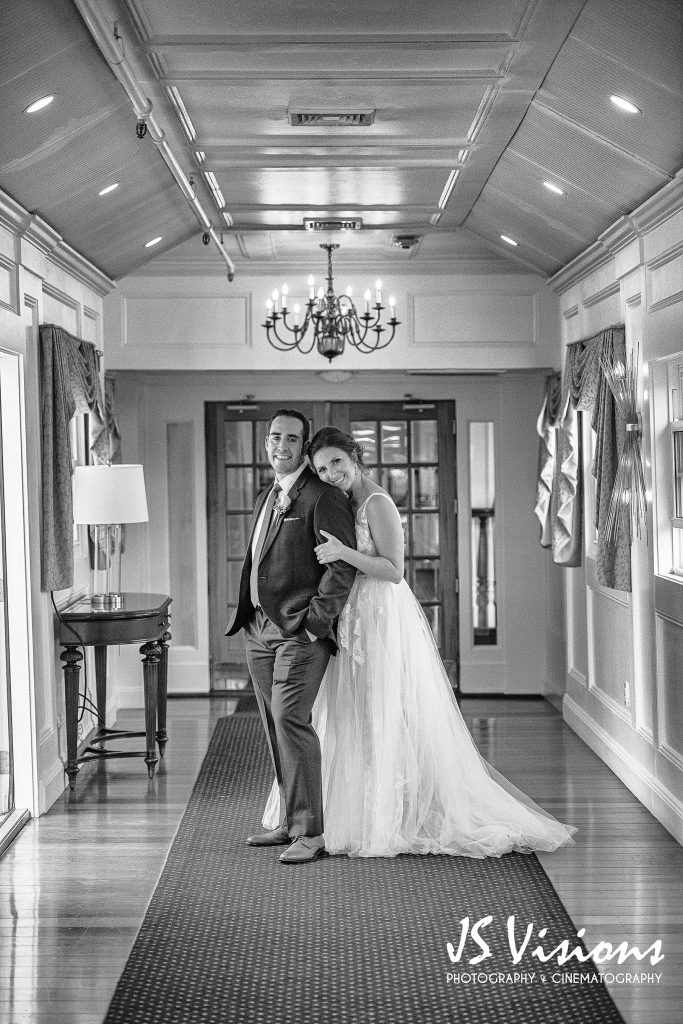
Black and white wedding photography strips a moment down to what actually matters. No competing colors, no distracting background — just light, expression and gesture. When a frame is about emotion rather than detail, black and white is almost always the stronger choice.
Over more than 25 years photographing weddings across Long Island and New York City, we’ve found that couples rarely ask for black and white by name. What they ask for is timeless. This is usually what they mean.
Why Black and White Still Works
Color carries information — the shade of the bridesmaid dresses, the flowers, the uplighting on the reception walls. That information is often wonderful, and it belongs in your album. But it competes. Remove it and the eye goes straight to the face, the hand, the tear someone is trying not to let anyone see.
Black and white also ages differently. Trends in color grading date a photograph fast — you can usually place a color wedding photo within a few years of when it was taken. A well-made black and white image is much harder to date, which matters when the photographs are going to sit on a wall for decades.
The Moments That Ask For It
Some parts of a wedding day lend themselves to black and white more than others:
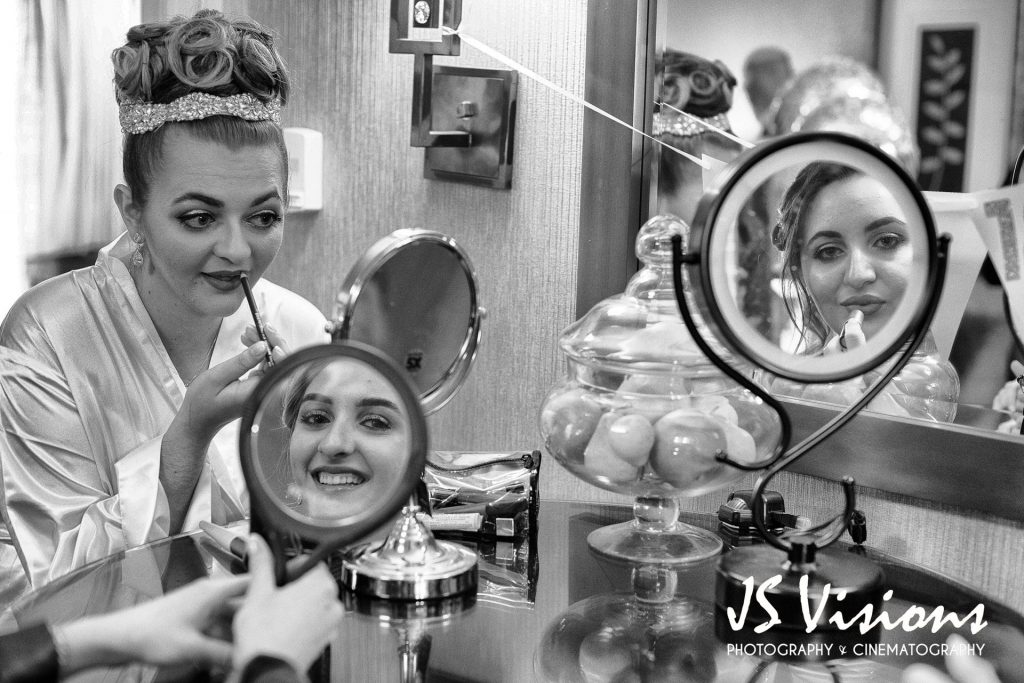
- Getting ready. Cluttered hotel rooms, mixed lighting, garment bags and coffee cups in the background. Black and white quiets all of it and leaves the anticipation.
- The ceremony. Faces during vows, parents watching, the moment before the first kiss. This is pure expression, and color adds nothing to it.
- Candid reception moments. Laughter at a table, a grandparent watching the dance floor, the quiet second when nobody realizes a camera is present.
- Difficult light. Harsh midday sun, mixed tungsten and LED uplighting, a dim church. Conditions that fight a color photograph often make a striking black and white one.

It’s a Decision, Not a Filter
A black and white conversion is not simply draining the color out of a finished photo. Contrast, tonal separation and where the shadows fall all have to be considered for that specific frame — two photos taken minutes apart can need very different treatment.
It also affects how a frame is shot in the first place. When you know an image is headed for black and white, you look for shape, contrast and gesture rather than color harmony. Backlight that would blow out a color frame becomes the point of the picture.

You Don’t Have to Choose
This is the question we get most often: does choosing black and white mean losing the color version? No. Both versions of a frame exist, and the choice of which one belongs in your album is made image by image.
Some couples want a predominantly black and white album with color reserved for the details they spent months planning. Others want the reverse. Both are good answers, and it’s not a decision you need to make before the wedding day.

A Note on Prints
Black and white photographs reward good printing more than almost anything else. A print with genuine blacks and clean highlight detail has a physical presence a screen simply cannot show. If there’s one image from your wedding worth printing large, it’s often a black and white one.
Planning Your Wedding Photography
If black and white is the look you keep coming back to, mention it early — it’s useful to know before the day. You can see more of our work on our wedding photography page and throughout our portfolio.
Planning a wedding on Long Island or in New York City? Get in touch — we’d love to hear about your day.